
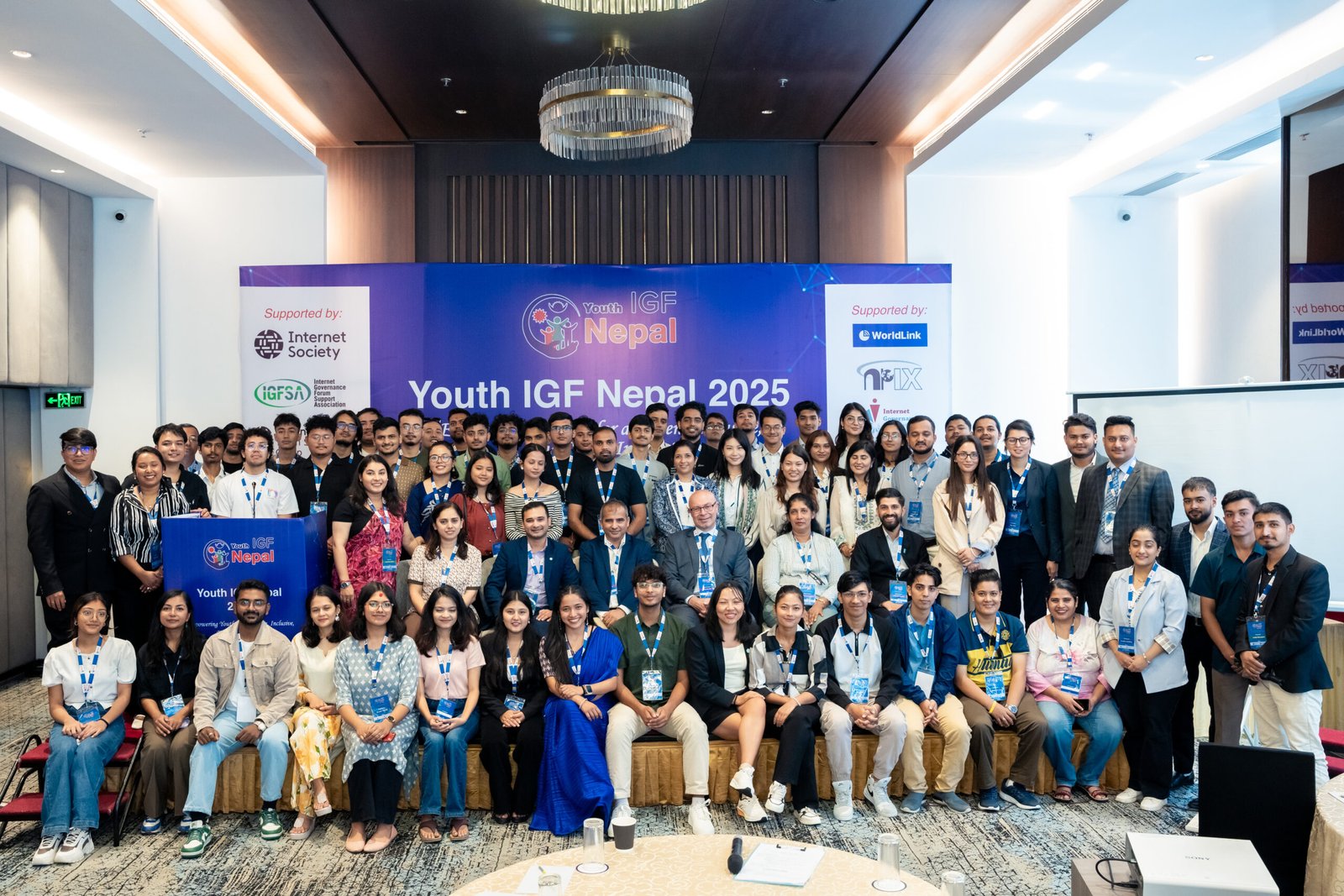
Youth Internet Governance Forum Nepal 2025
“Empowering Youth for an Open, Inclusive and Secure Internet”
The Youth Internet Governance Forum (Youth IGF) Nepal 2025 concluded with resounding success, bringing together over 120 passionate participants from diverse sectors to shape the future of Nepal’s digital landscape. Held on October 7 at Vivanta, Kathmandu, the fourth edition of the forum was a vibrant convergence of ideas, innovation, and youth leadership.
Hosted by Open Internet Nepal (Internet Society Nepal Chapter) with support from global and local partners including the Internet Society Youth Standing Group, IGFSA, UNESCO, APNIC, and ICANN, the event served as a strategic platform to prepare Nepal’s youth for meaningful engagement in global digital governance.
Setting the Tone for Transformation
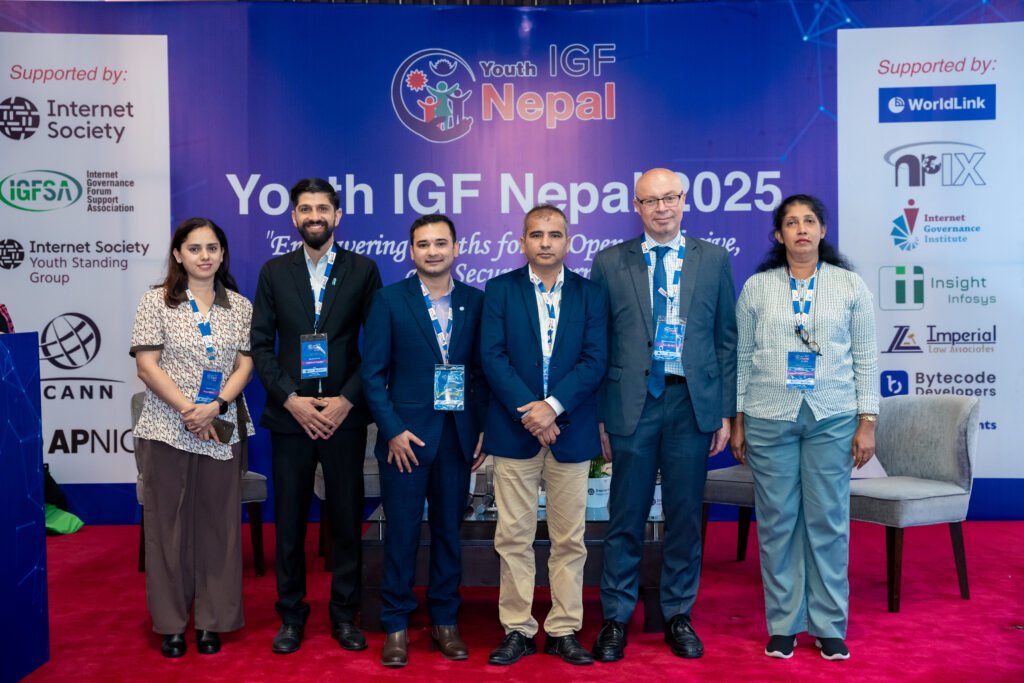
The Opening Ceremony, chaired by Ananda Gautam, set a powerful tone for the day, celebrating youth leadership in digital governance. Ashirwad Tripathy reaffirmed Open Internet Nepal’s steadfast commitment to the cause, calling for active youth engagement across all layers of the internet ecosystem, from technical infrastructure to policy development.
Global perspectives were brought by Jaco du Toit (UNESCO), who introduced the ROAM-X principles (Rights, Openness, Accessibility, Multistakeholderism, and Cross-barrier inclusivity). He framed the internet not just as a tool, but as a human right, emphasizing that youth must be co-creators of its future.
Reflecting on the movement’s roots, Deepa Bhattarai shared insights on the origins of Youth IGF Nepal, encouraging the new generation to take ownership and lead the movement forward. This sentiment was echoed by Sagarika Wickramasekara (Internet Society), who shared her inspiring journey from youth advocacy to global leadership, highlighting the vast opportunities available within the Internet Society community.
Rounding out the session with a historical perspective, Baburam Aryal likened the internet to water, a vital public resource. He provided an overview of the evolution of internet governance and excitingly announced new fellowship opportunities for APSIG 2025.
Opening Plenary
Banned and Beyond
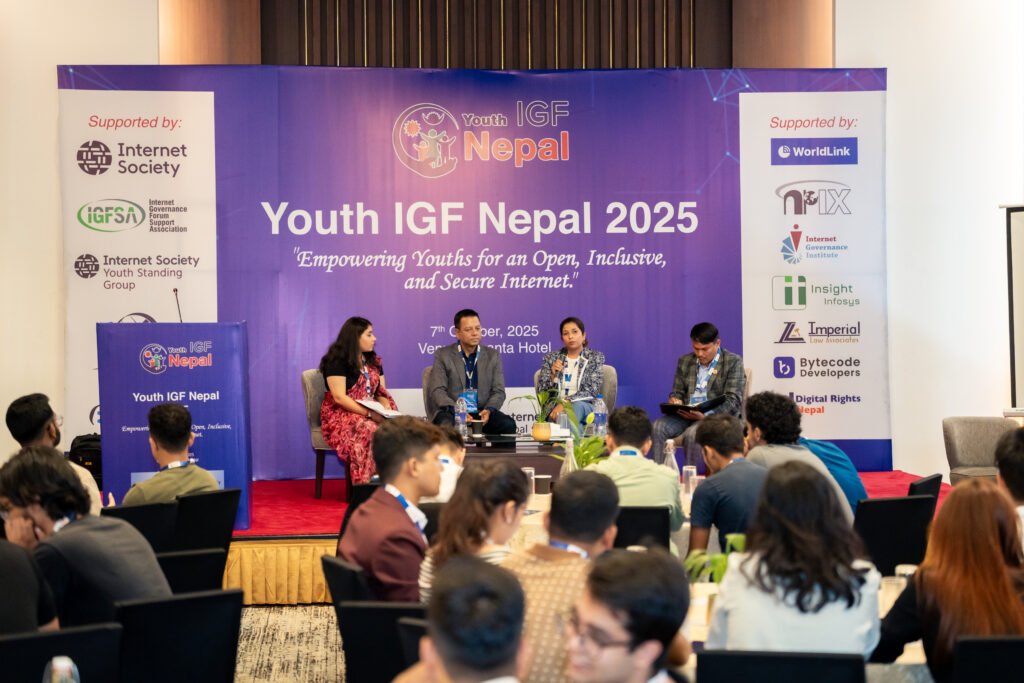
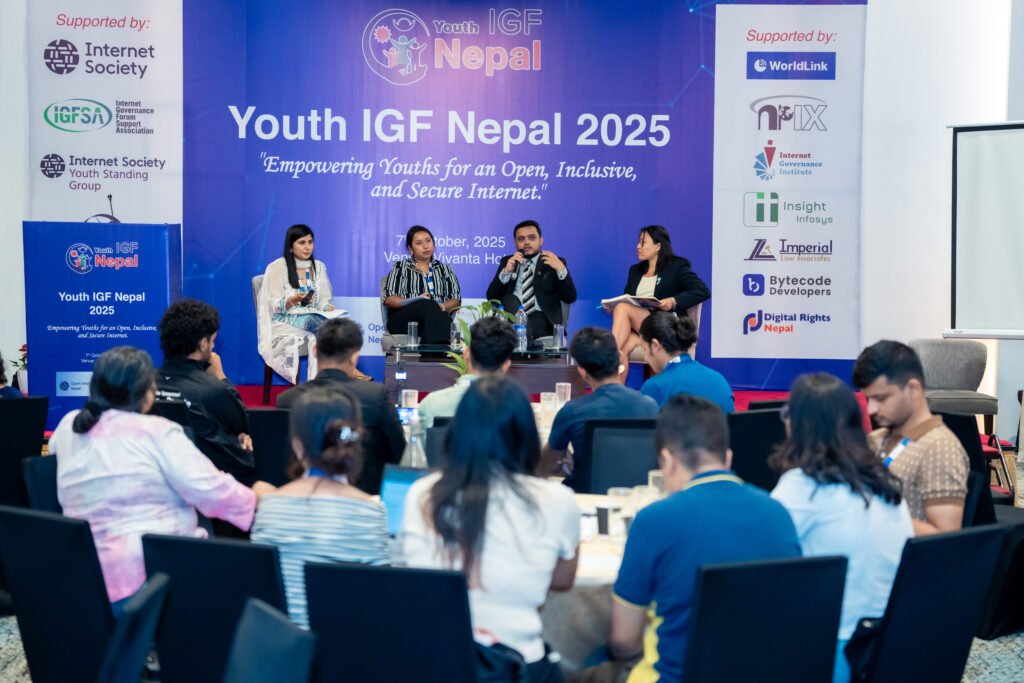
The Opening Plenary tackled the most pressing issue of the year: social media regulation. Moderated by Sadichchha Silwal, the panel featured voices like Hon. Padam Pariyar (MP, National Assembly) and Santosh Sigdel (Digital Rights Nepal).
The dialogue critically examined the recent Directive for Managing the Use of Social Media 2023, the TikTok ban, and the September 4 shutdown of 26 platforms including Facebook and Twitters, with stakeholders agreeing that while regulation is necessary, blanket bans risk undermining democratic values.
Multi-Stakeholder Role Play Session
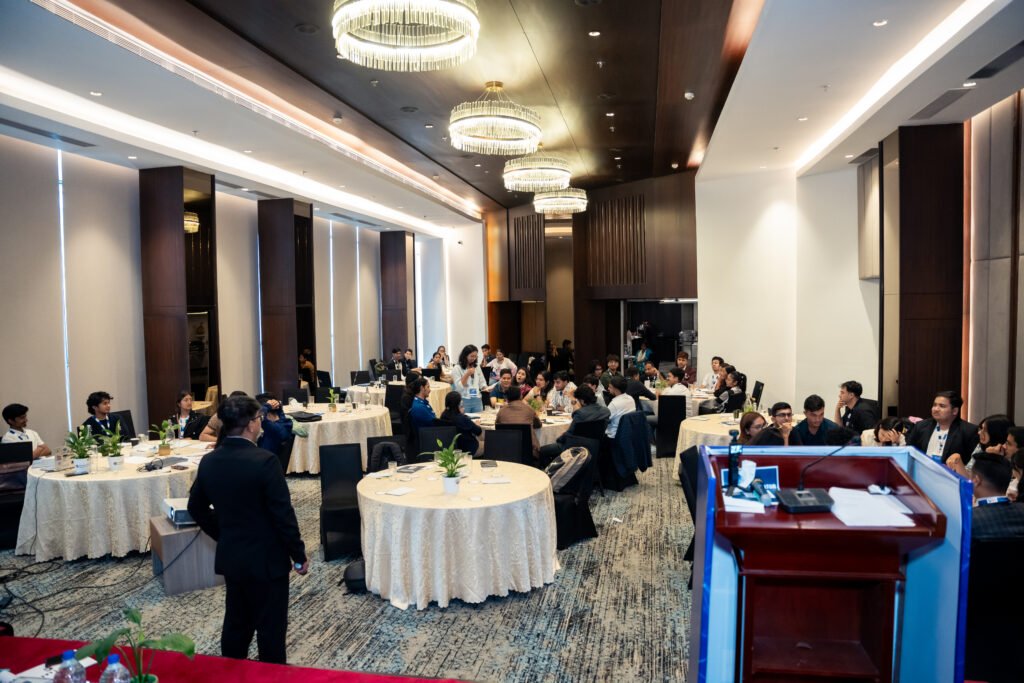
Facilitated by Nikesh Balami, this interactive session engaged participants in a dynamic simulation of real-world digital policy debates.
Participants were divided into stakeholder groups to deliberate on the challenges of social media regulation in Nepal:
The simulation encouraged participants to step into the perspectives of different actors, fostering empathy and a deeper understanding of the tensions between protecting users and preserving digital rights.
Key Outcome
A consensus that effective regulation must be inclusive, transparent, and rights-based, rather than relying on blanket bans.
Panel Discussion
Youth Power in Internet Policymaking
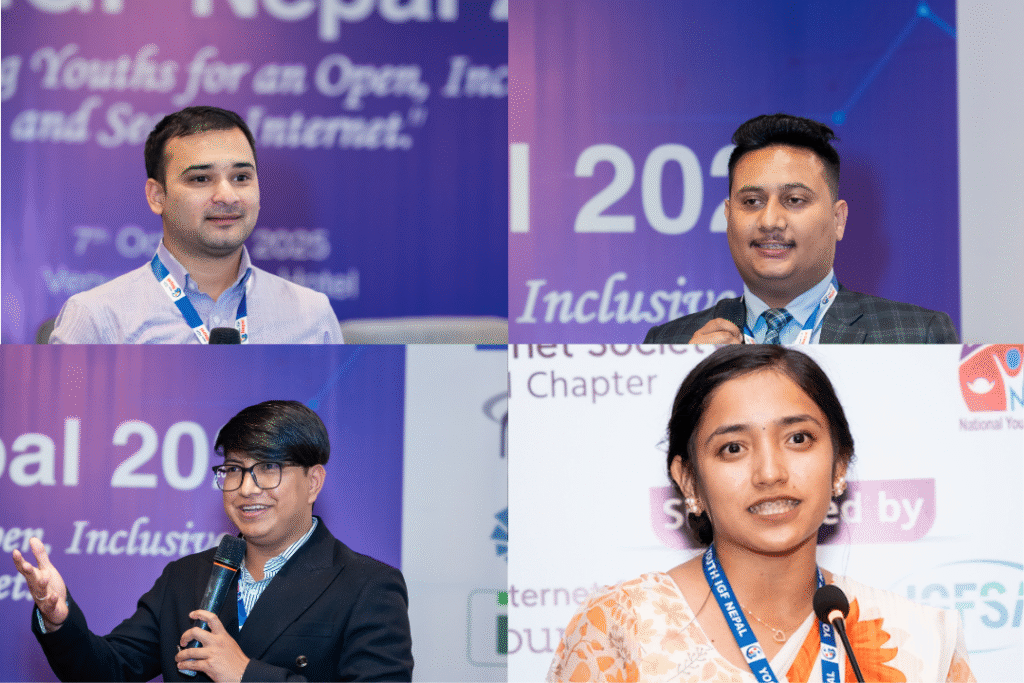
Moderated by Suvechchha Chapagain, this critical session explored the structural barriers and opportunities for youth engagement. The panel featured Nhasala Joshi, Pawan Acharya, and Kabita Rai.
Nhasala Joshi
Questioned the depth of youth involvement, advocating for advisory mechanisms to structurally include youth rather than just token engagement.
Pawan Acharya
Highlighted the demographic imbalance and called for institutional access and civic tools like petitions.
Kabita Rai
Brought an intersectional perspective, emphasizing the need for safe civic spaces and representation for marginalized identities including Madhesi, Dalit, and gender-diverse youth.
Lightning Talks
Digital Safety & Hygiene
The event also featured high-energy Lightning Talks focused on digital safety:
Breaking the Chain of Falsehoods
Pravin Bhatta | NepalFactCheck.org
Equipped youth with verification techniques like lateral reading and reverse image searching to combat misinformation.
The Rising Landscape of Cybercrime
Suraj Ray
Stressed that prevention begins with user awareness and media literacy, highlighting emerging cyber threats facing Nepal’s digital citizens.
A New Chapter Begins
Leadership Handover
The event concluded with a significant organizational transition. Outgoing Chair Ananda Gautam reflected on the remarkable journey of Youth IGF Nepal, from a grassroots initiative to a UN-recognized platform.
🔄 Passing the Baton
The newly formed leadership team expressed their renewed commitment to strengthening youth participation, enhancing digital literacy, and fostering meaningful engagement at both national and global levels.
Gratitude & The Road Ahead
A massive thank you to all participants, speakers, moderators, and our incredible partners, especially the IGFSA, ICANN, APINIC, and UNESCO Office in Kathmandu.
“Youth IGF Nepal 2025 has proven once again that Nepali youth are not just users of the internet; they are the architects of its future.”
The conversations ignited here will echo through Nepal’s digital policies in the years to come.
See You in 2026!


